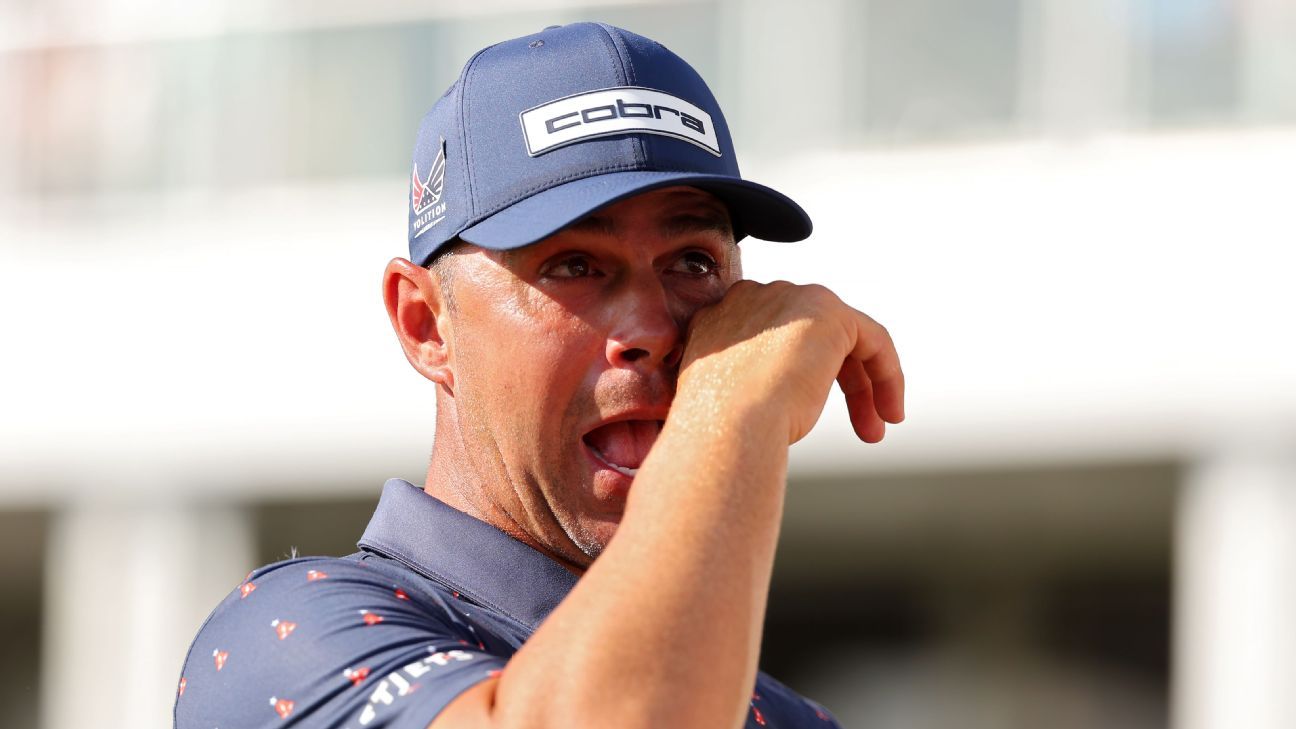
In a powerful display of resilience and golfing prowess, Gary Woodland clinched the Texas Children's Houston Open title, marking his first victory on the PGA Tour in nearly seven years. This monumental win on Sunday was far more than just a golf tournament triumph; it was a deeply emotional comeback story, following Woodland’s brain surgery in 2023. For many fans, the question of when was Gary Woodland's last win has finally been answered with a resounding, inspiring "now."
A Resounding Return to the Winner's Circle: Houston Open 2026
Gary Woodland's performance at Memorial Park Golf Course was nothing short of spectacular, culminating in a 3-under-par 67 in the final round. His overall score of 21-under 259 across four rounds was enough to secure a commanding five-stroke victory over Denmark's Nicolai Hojgaard. This win is Woodland's fifth on the PGA Tour, but the first since his iconic U.S. Open triumph in 2019. The significance of this achievement is amplified by the fact that he had shared second place at the same venue just last year, hinting at the potential that was about to explode.
The final round saw Woodland establish an unassailable lead early on. He went 4-under on the front nine, a surge fueled by an incredible run of consecutive birdies on Holes 7, 8, and 9. This momentum quickly translated into a six-stroke advantage. When Hojgaard bogeyed No. 10, the margin widened to a comfortable seven shots, transforming the latter half of the round into what felt like a victory procession, albeit one filled with profound personal meaning for Woodland.
While Woodland was extending his lead, other notable performances unfolded across the course. Johnny Keefer shot a brilliant 64 to tie for third at 15-under, alongside defending champion Min Woo Lee of Australia, who carded a 67. Sam Stevens finished fifth at 14-under with a 67. Jake Knapp made an impressive leap with a bogey-free 62, highlighted by a 43-foot eagle putt on the par-5 16th, placing him in a tie for sixth at 13-under with Chris Gotterup, Jason Day, and Sudarshan Yellamaraju. Unfortunately, Michael Thorbjornsen, who needed a strong finish to qualify for the Masters, struggled with a double bogey and three bogeys, tying for 14th.
This victory re-establishes Woodland among the elite of professional golf, proving that even after facing life-altering challenges, dedication and sheer will can lead back to the pinnacle. His ability to perform under pressure, especially in a tournament where he previously had a strong showing, underscores his deep connection with the course and his renewed confidence.
For more details on his journey to this milestone, read about how Gary Woodland Ends Seven-Year Wait With Houston Open Triumph.
The Unseen Battle: Overcoming Brain Surgery and PTSD
The true heart of Gary Woodland's Houston Open win lies not just in his scorecard, but in the arduous journey he has undertaken since 2023. That year, Woodland underwent brain surgery to remove a lesion, an experience that sidelined him for four months and marked the beginning of a profound personal battle. His transparency about this period has resonated deeply with fans and peers alike, painting a vivid picture of the struggles faced by athletes beyond the physical demands of their sport.
Upon his return to the Tour, Woodland candidly spoke about feelings of fear and anxiety. More recently, prior to the Houston Open, he revealed a diagnosis of Post-Traumatic Stress Disorder (PTSD) following his surgery. Doctors had even advised him that, ideally, he wouldn't be competing on Tour at all, given the severity of his condition. Yet, Woodland "soldiered on," as he described it, embodying a spirit of defiance against the odds.
His post-surgery period wasn't immediately marked by wins. In his 55 starts before this week, his best results were two top-10 finishes, including a runner-up at last year's Houston Open. These modest results, however, were not indicative of a lack of effort but rather a testament to the immense internal fight he was waging. Woodland’s openness about his struggles has not only strengthened his bond with his fan base but also elevated his standing as an advocate for mental health awareness in sports.
A Message of Hope and Resilience
In the emotional moments following his final putt, a choked-up Woodland delivered a powerful message that transcended the sport: “Anybody that is struggling with something, I hope they see me and don’t give up.” He acknowledged that his fight continues, stating, “It’s just another day, right, that I’ve got to keep healing. Today was a good day. But I’m going to keep fighting. I’ve got a big fight ahead of me and I’m going to keep going, but I’m proud of myself right now.” This raw honesty provided a rare glimpse into the mental fortitude required to not only return to professional sport after such trauma but to excel at the highest level.
Woodland’s journey offers invaluable lessons in resilience:
- Embrace Vulnerability: His willingness to share his fears and anxieties allowed him to connect authentically with others and destigmatize mental health challenges.
- Persistence in the Face of Adversity: Despite doctors' advice and modest initial results, Woodland never stopped striving for his goal.
- Focus on Small Victories: Acknowledging "today was a good day" highlights the importance of appreciating progress, however incremental, in a long battle.
Masterclass in Poise and Precision: How Woodland Controlled the Field
Gary Woodland's victory wasn't just about his powerful drives or precise iron play; it was a psychological masterclass. Starting the final round with a one-shot lead, Woodland faced the immense pressure of defending his position while navigating the lingering effects of his personal battles. His ability to expand that lead early on, especially with those crucial birdies, demonstrated a profound sense of calm under pressure. He focused on his game, taking "deep breaths that have become a central part of his routine," a conscious effort to manage anxiety on the course.
His performance was a stark contrast to the initial discomfort he admitted feeling, even with a seemingly comfortable five-shot lead. “It felt a lot closer than five in my head, I can tell you that,” Woodland confessed. This insight reveals the internal dialogue and intense focus required to maintain such a lead, especially when facing world-class competitors. His strategic approach to the back nine, avoiding major errors while his closest competitors like Nicolai Hojgaard found trouble, solidified his position.
The Houston Open showcased not only Woodland's individual brilliance but also the depth of talent on the PGA Tour. While Woodland was a clear victor, the competition behind him was fierce, with several players making significant moves. This environment, where every shot counts and every competitor is vying for position, makes Woodland's dominant win even more remarkable. It speaks to his comprehensive game — powerful off the tee, sharp around the greens, and most importantly, mentally impenetrable when it mattered most.
Explore the full spectrum of his journey and what this fifth victory signifies for his career: PGA Tour: Gary Woodland's Fifth Victory & Inspiring Resilience.
Impact Beyond the Green: An Inspiration for All
Gary Woodland’s Houston Open victory extends far beyond the confines of the golf course. It’s a compelling narrative of human spirit, illustrating that strength often lies not in avoiding struggles, but in confronting them head-on. His journey serves as a beacon of hope for anyone grappling with significant life challenges, whether physical ailments, mental health issues, or professional setbacks. His return to the winner's circle, especially after the profound difficulties he faced, is a testament to the power of perseverance and self-belief.
This win also reignites conversations about mental health in professional sports. By being so open about his PTSD diagnosis and anxiety, Woodland has normalized these struggles for countless others, both inside and outside the athletic arena. His story encourages empathy, understanding, and the crucial message that it's okay not to be okay, and it's essential to keep fighting. For aspiring athletes or anyone facing a personal mountain, Woodland's comeback provides a tangible example of how dedication to one's well-being and a relentless pursuit of goals can lead to extraordinary achievements.
From a purely golfing perspective, this victory firmly places Woodland back on the map as a formidable competitor. It suggests that his best golf might still be ahead of him, empowered by a newfound perspective and mental toughness forged in adversity. The joy and relief evident in his post-win emotions were palpable, reminding us that sometimes, the greatest victories are those earned against one’s deepest fears.
The 2026 Houston Open will forever be remembered as the moment Gary Woodland's last win became a powerful symbol of an incredible comeback. After years of battling severe health issues and the subsequent emotional turmoil, Woodland didn't just win a golf tournament; he triumphed over adversity. His performance, marked by strategic brilliance and unwavering mental strength, captivated audiences and delivered a profound message of hope: don't give up. This victory isn't merely a statistic in his career; it's a chapter of extraordinary resilience, reminding us all of the enduring power of the human spirit to heal, fight, and ultimately, conquer.